Hi.
Thanks for checking out my site! I’m an editor, writer, and content strategist with experience building content across digital, email, print, and travel media. And that’s my dog, Olive, who supports me in all of my endeavors.
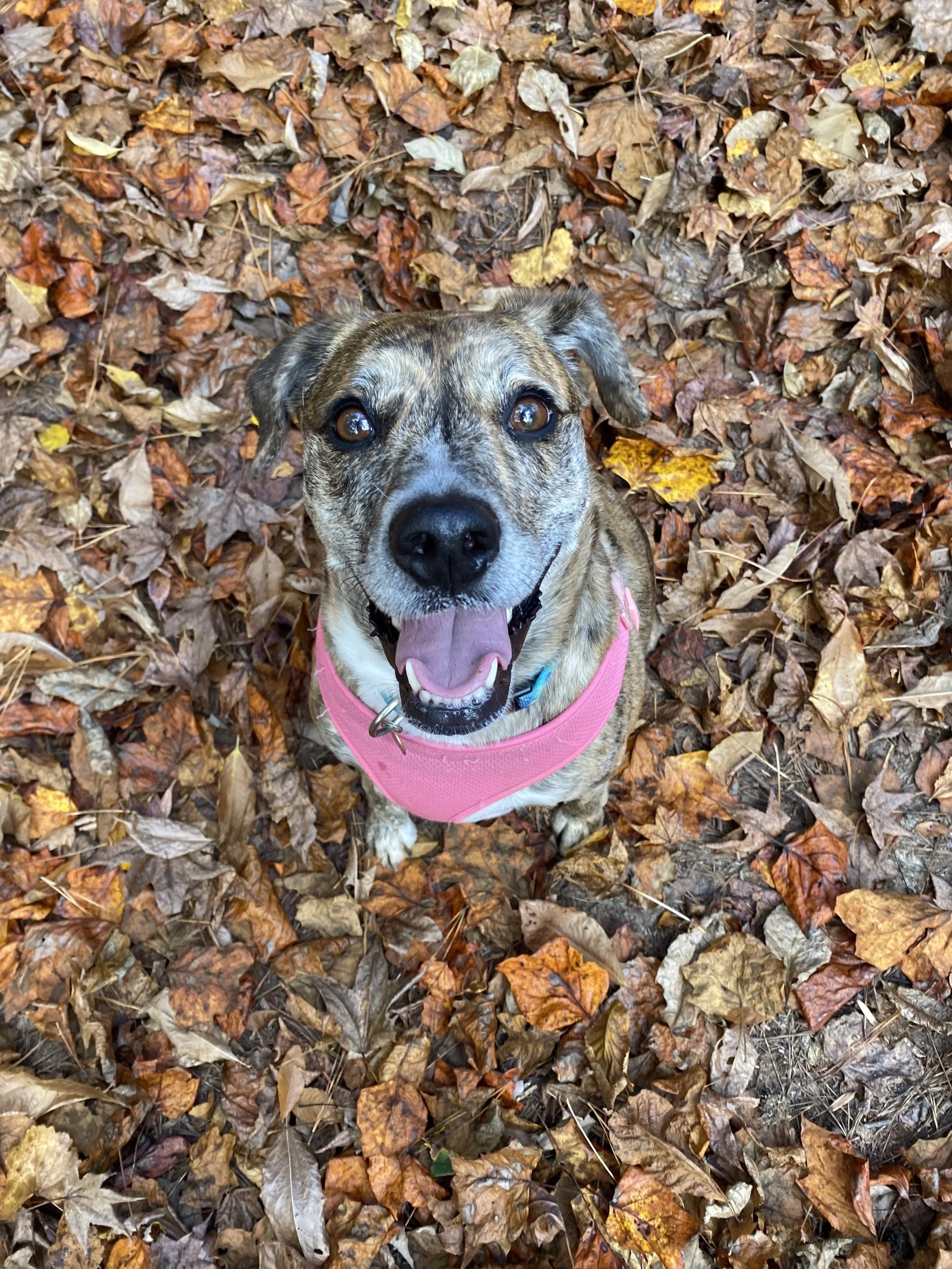
Thanks for checking out my site! I’m an editor, writer, and content strategist with experience building content across digital, email, print, and travel media. And that’s my dog, Olive, who supports me in all of my endeavors.
Reaching more than 500,000 subscribers, The Pipeline is a first-person newsletter examining women’s work and life through reflection, cultural analysis, and data from weekly reader polls. The newsletter blends personal writing with reporting-informed context to explore how careers intersect with identity, health, relationships, and power.
Top reads:
““[The newsletters’] messages are always inspirational, perceptive, and lifting. In addition to the excellent themes that always aid in my personal development, there are also helpful career resources. I love it.””
Why You Can't Listicle Your Way to Wisdom
Two years ago, during a solo trip to Portugal, I booked a spot on a group tour to the coast. A national park, wine country, castle ruins, and a beautiful seaside town were all listed on the booking. As were seven other people.
Until everyone canceled. Every single person.
…
In Modern Friendships, These Are All the Small Ways We Stay Close
Last week, my best friend and I discovered that her baby (due any day now) wiggles when she plays my voice memos aloud. For years, we've memoed throughout the day as we've lived in different states, but neither of us ever considered that over the past nine months, her little girl might have been quietly familiarizing herself with me: my tone, my "good morning," my "happy Friday."
…
What Sustainable Care Looks Like in 2026
Last week, when we polled our audience about whether their thoughts on parenthood or having children had changed over time, I already knew what the most popular answer would be: yes, significantly. (I was right.)
…
Success Is a Game Show. Here’s How to Win.
Have you ever watched Who Wants to Be a Millionaire?
In the late ‘90s, when the show first aired, it was one of my family’s go-tos—so familiar to me that even now I remember exactly how watching it felt in my body. The music, the lights, the clock, the tension. Regis Philbin’s signature Bronx chatter.
…
You Don't Need Permission to Do the Thing
A few months ago, I found myself wondering: would I ever call myself an artist?
In my elevator pitch, I usually say I’m “a creative”—a noun that sits between how society frames my work and how it actually feels to me. A mix of corporate-sanctioned legitimacy and the feeling of constantly exhaling iridescent carbon dioxide.
…
Why I Spent My 20s as a Baked Potato
Throughout my 20s, I lived by what I called the “baked potato theory.”
…
Forget the 5-Year Plan. Follow the Desire Path.
This week we’re asking our audience whether they have 5- or 10-year plans for their careers. While I’d usually wait for the results to write something up, I feel this topic warrants more immediate discussion.
…
Living in the South, humidity is a constant—which I know people hate. When you grow up here like I did, you get used to newcomers lamenting the “oppressive” heat, and that’s fair. It’s heavy and nonstop and a lot.
…
How I Romanticized Using My Phone Less
I wake up, and within the first few hours, I switch my phone to “90s rom-com lead” mode. No notifications or push alerts. No texts. Just calls from a limited selection of people I know.
…
What It Means to Be Trying Really Hard, Actually
I always love this scene near the end of the 2007 movie Juno.
Pregnant teen Juno, just before going into labor and giving up the baby for adoption, confesses love to Paulie Bleeker, the baby’s father: “I think I'm in love with you. 'Cause you're, like, the coolest person I've ever met, and you don't even have to try, you know.”
…
Why Ghosting During the Job Search Hurts So Much & What Experts Say to Do About It
I usually take advice from social media therapists with a boulder-sized grain of salt. But a few weeks ago, this one-liner got lodged in my brain: "Resentment and rumination are your mind trying to win an argument you're never going to have." That thought feels relevant for today’s Pipeline.
…
Are You Bracing for Impact at Work?
Last weekend, 2016 was trending. On social media, users reminisced about simpler, pre-pandemic times. I didn’t participate. My 2016 wasn’t that good.
…
The Magic of Discovering Your Life's Work
A few years ago, after a hard breakup, I channeled most of my feelings into learning about astrology, which is how I ended up downloading the CHANI app to listen to astrologer Chani Nicholas’ weekly readings. What better way to find comfort in your next steps than by discovering what’s already written in the stars?
…
2025, we need to talk. It’s not you… it’s, well, complicated. This year, the workforce has been grim—and it’s felt personal in ways that are hard to ignore. Moms of young children left the workforce at the highest rate in more than 40 years, and 57% of women told us their work-life balance worsened. Long-term unemployment spiked. And over one million job cuts were announced, largely due to cost‑cutting and AI restructuring.
…
What to Do When You’re Stuffed, Tired & Overstimulated
If you live in the United States, then by the time you read this, you’ve likely done more eating, talking, emoting, and reading the room in the past week than you will the entire month of January. For many, Thanksgiving is the Super Bowl of socialization. This spectacle is both fun and exhausting. And the latter is the reason we asked our audience a few weeks ago whether they get the day after Turkey Day off. More than half of you do, and that’s wonderful.
…
The Courage It Takes to Build the Support You Deserve
Last week, we published an article on cultivating peer networks. This topic is a tricky one to write about, because the minute you see the words “peer network” in a headline, you probably think of LinkedIn requests and networking happy hours. It’s often seen as a career advancement tool, not a survival guide. But a peer network is actually exactly that: a community and safety net that helps you withstand just about anything.
…
A Mini Mindset Glow Up for the Week Ahead
What’s one belief about yourself that’s helped you most in your career? Mine has always been that I belong in every room and meeting I enter. I’m capable, smart, and creative, and there’s clear evidence that I’m good at what I do. This faith in myself has been a cornerstone of my career. Last week, we asked our audience this same question, focusing on a few core traits— confidence, curiosity, adaptability, empathy, and perseverance—to help us get a better idea of how everyone else feels.
…
What's Getting in the Way of Women's Self-Care?
Last week we asked our audience which online trends about women they find to be the most aspirational. Trad wife, soft life, girlboss, quiet quitting, and other viral frameworks made the list. But the tried-and-true options—self-care, body positivity, and financial empowerment—won out. My read? Most women aspire to love and take care of themselves. Knowing that is pretty powerful. It’s also telling, because “aspirational” implies that many of us haven’t quite reached that goal.
…
Why Your Career Isn’t Your Parents’ Career (& That’s Okay)
A message from us InHerSight Love what you're reading? From career growth to midday meditations, our email lineup delivers thoughtful insights, relatable data, and space to just be. Add InHerSight to your inbox today. (It's free!)Subscribe ›Seventy-one percent of our audience says their career is not similar at all to that of their parents. The competitive and time-intensive job market. Inflation. The housing crunch. Shifts in how we view work-life balance and employee loyalty.
…
Doomscrolling Again? Your Heroine's Journey Starts Here
Like many millennial women, I love The Lord of the Rings. The story, the characters, the world. The fact that being hot is somehow a hallmark of an entire race (the elves) and having curly hair, another (the hobbits). That’s no doubt why, when I spend too much time scrolling through my phone—reading the news, ingesting hot takes—I often find myself later thinking of this quote from J.R.R. Tolkien: “I wish it need not have happened in my time," said Frodo.
…
The Fox in the Garden & Other Signs It's Time to Stop Waiting
Our standout poll last week was about solo travel. More than 600 readers weighed in, and we received 173 comments offering travel advice to those who’ve never tried. Just over half of respondents (55 percent) say they feel very comfortable traveling alone. You can read some of the highlights here. I started traveling solo abroad in 2021. My first trip was to Paris. I chose the City of Lights because I can stumble through French comme un enfant. While there, I did.
…
4 Borrowed Routines for Your Perfect Summer Reset
Here’s the thing about summer: Where I live, it stretches from April through October. And inevitably, every year, I need to briefly tap out. Around mid-August, the heat and humidity—which I usually romanticize to an absurd degree—become oppressive, the monotony pressing down like a stalled warm front. I need an escape… so this year, I got one. I’m writing this week’s newsletter from one of my best friends’ apartments in upstate New York.
…
What Powering Through Migraines at Work Taught Me About Pain & Permission
Eighty-six percent of our audience says they experience migraines. Hey, fam. I’ve had regular migraines since I was 12. Mine, which are triggered by barometric pressure changes, thankfully follow a pattern and aren’t as recurrent as some of my friends’ headaches. They begin with pain-free vision loss—an ocular migraine—which is my signal to find medication and caffeine ASAP. In that window, I down two extra-strength acetaminophen and whatever is left of my coffee. Then I self-soothe.
…
Burnout Is Real—Here’s How to Find Peace in the Small Things
My water heater’s pilot light likes to go out when it rains, and this summer has been rainier than most. The first time I ever lit the pilot, I ran. I mean, I followed the directions—turn off the gas, wait 10 minutes, hold down the knob and press the igniter button until the light begins to blink, turn the knob—and then I ran. Water heaters make this whoosh noise when they fire up, and no one tells you that. Actually, no one tells you anything about water heaters ever. I wish I knew less.
…
How to Know When Self-Care Is Enough—and When It Isn't
Lately I've been bristling at the term “self-care.” I support self-care for what it should be, but the term has become a buzzword, often applied to scenarios where more intentional and serious language should be introduced. Watch the news, then imagine me saying, what our world needs is more self-care. Or picture the early days of the pandemic: Don’t worry, we will simply self-care our way through this global crisis.
…
The Importance of Building Something That Echoes Back
Sixty-eight percent of our audience says they feel pressure to leave a lasting legacy. I’ve been there. I’ve always been drawn to careers centered on service to the community. That’s a huge reason I pursued journalism when I was younger. Memorably, in my first internship interview, my soon-to-be editor asked what I wanted to write about, and I said “people” with zero explanation. My path was that straightforward to me even at 21 years old.
…
3 Unique Ways to Do Hard Things
This week, I was going to write about celebrating birthdays at work, because mine is next week and we recently ran a poll on the topic. (While 28% of us love our birthdays, many of us, myself included, simply want the day off to celebrate on our own. I wouldn’t turn down a slice of office sheet cake, though.) But as I entered my usual pre-birthday reflection phase, another idea came to mind.
…
It’s in the Evidence: 4 Signatures of Meaningful Self-Advocacy
I have never been shy about voicing what I want or need in the workplace, regardless of the company culture. This is both a flex and a fault. At different stages in my career, I should have exercised more tact. Instead, I forged ahead, ready to defend myself. That heedless self-assurance often silenced a quieter, wiser voice recommending caution: Maybe self-advocacy isn’t conflict. Spoiler: That voice was right. And that wisdom sits at the heart of our latest survey findings.
…
24 Reasons Women Say They’re Going Back to School
A recurring InHerSight finding is that most women—around 73 percent—want to change careers. Whether that’s due to boredom, a desire for more pay, a need for flexibility or lifestyle changes, or a yearning for mission-centered work, this number remains consistent. Only a minority of people stick to one path and love it.
…
This Isn’t a Crisis. It’s a Turning Point.
Have you ever had a quarter- or mid-life crisis? According to a survey we ran earlier this week, 68% of our audience says they have, but personally, I’m not so sure. For me, “midlife crisis” is still framed in stereotypical pop culture terms, like I bought a convertible or I’m renovating a Tuscan villa that I purchased spontaneously while on a bus tour of Italy. As I’m distinctly villa-less, these experiences don’t feel like they apply to me.
…
3 Ways to Achieve More Emotional Rest
Where do you feel emotionally at rest? Coming out of the pandemic lockdown, I was moving through a few major life transitions that made showing up as my most grounded, present self feel out of reach. At the time, I was also beginning to lean heavily into volunteering at a community theatre nearby—something I’ve written about before.
…
15 Tiny Ways to Make Time for Yourself During the Day
You’re busy—juggling kids, pets, work, or other life responsibilities—and you barely have any time for yourself before the day begins. You’re also just like 68 percent of your peers. Last week, we asked our audience whether they feel like they have enough time for themselves in the morning before other tasks kick in, and 45 percent said “no.” Another 23 percent said “somewhat, but not as much as they’d like.” Relatable.
…
Our Readers Say They're Stressed About Work—Even in Their Dreams
Do you dream about work? About a quarter of the people who responded to our recent survey on the topic say they dream about work a few times a week. Another quarter say the dreams happen a few times a month. Seventy-six percent of respondents say the dreams make them feel anxious or stressed. Been there. In a previous job, I became so stressed and overworked that I dreamed of my death every night until I eventually quit. Toxic workplaces have dreary ramifications, even in an unconscious state.
…
How the 10-Minute Rule Can Reframe Your Approach to Work
I’ve been running off and on for a little over a decade. I used to have a love-hate relationship with running, but I did it anyway. There’s no lead up to an inspirational message in that particular sentence; for years, I did a thing I found little joy in because I wanted to be a runner, and to me, that meant achieving a certain pace or running a certain distance. Things like split times and hill training brought me great stress.
…
If You Want to Enjoy Networking, Do This
Some of InHerSight’s most frequently asked questions are about networking. As such, we have dozens of articles dedicated to the subject on our platform. I’d like to add one more, inspired by three recent InHerSight surveys: Last week, we asked our audience to share their least successful networking strategy, and the dreaded cold outreach over LinkedIn—the least intimate of the bunch—was the top flop. The second most popular response?
…
How to Trust Your Gut at Work & Why You Should
Last week, InHerSight asked our audience how connected they feel to their intuition—the gut feeling kind of intuition, not necessarily the sixth sense kind. Forty-nine percent of you say you feel strongly connected, and I feel the same way. Coming from a heavily quantitative platform like ours, this question might seem to have come out of left field. Hard data is the core of everything we do—how we assess companies, how we support women. We are numbers people, and I love it.
…
7 Ways Women Cope with the Sunday Scaries (& How to Make Each Your Own)
Eighty-nine percent of women regularly feel some sort of anxiety heading into the workweek—a feeling termed the “Sunday Scaries” by many media outlets (including ours). It’s hard to pinpoint who coined “Sunday Scaries,” and precisely when. But the phrase, which surfaced sometime around 2009, serves as a lighthearted slogan for the very real tension it represents. To bring it back to reality, the Sunday Scaries is the anticipatory anxiety that people feel when heading into the workweek.
…
On Resolving to Start the New Year Softly
My first car had a manual transmission. You don’t need to have driven a stick shift to understand what that means for a beginning driver. Think of Princess Diaries, when Mia Thermopolis is awkwardly bouncing forward—and rolling backward—through San Francisco. That was me at 16, minus the part where my grandmother knights a trolley driver and a police officer. The majority of my trips to and from school involved intermittent jerking and stalling.
…
2 Things Every Meaningful ‘Thank You’ Needs
Whenever anyone asks, What’s your love language? I always respond: “All of them.” Acts of service, words of affirmation, receiving gifts, quality time, and physical touch—they all resonate with me, as long as the person delivering them is genuine. Authenticity is a bedrock, not only in how we express affection but also in how we show appreciation. This is especially true when it comes to gratitude in the workplace—the topic of InHerSight's polling last week.
…
Dealing with Conflict at Work? Here Are 17 Things Your Best Friend Would Tell You To Do
When I’m frustrated or upset, the first people to hear about it are my best friends. A text to the group chat, a not-so-quick voice memo, an emergency phone call and a long walk—my friends all live in far-flung cities, but they’re also always right here, problem-solving with me remotely. It’s unsurprising to me, then, that a plurality of women (34%) tell InHerSight they deal with negative feelings at work in the same way, by venting to a trusted friend or colleague.
…
To Find Fulfillment, Invest in Happiness Revenue Streams
Based on a survey InHerSight conducted last week, 75 percent of women say it’s important or very important for their job to provide a sense of fulfillment. I understand this desire completely. When you spend one-third of your life at work, you want what you’re doing to matter—and you want to feel happy, too. Happiness is a more important metric than we often allow. I used to be able to pinpoint the time when I was the happiest I’d ever been.
…
Reflections on Age, Grief & Releasing Expectations
In a recent conversation about age and what it means to progress in 2024, I voiced this fear: “I’m worried you’ll measure my achievements against milestones that don’t exist anymore.” There was a time when the path forward for many women looked clear. Go to college (if possible), graduate, marry, buy a house, choose a career, have kids—these markers were laid out in what I used to call “the conveyor belt,” and we were all lined up to tackle one life goal after another. People expected that of us.
…
To Change How You Think, Try This
I have a note in my phone called “affirmations” that I’ve been updating for a little more than four years now. Every time I hear or think of a phrase that challenges a negative core belief, I jot it down, intermittently returning to the note to allow those words to take a victory lap around my brain.
…
How to Cope with the Stress of Current Events
Last week, InHerSight surveyed more than 500 women about current events, asking them to share which of the following four factors causes the most stress: Economic uncertainty: Concerns about inflation, job security, or financial stability Political climate: Anxiety related to political instability, elections, or policy changes Health and safety: Stress due to ongoing health concerns, such as public health crises or safety issues Social issues: Worries about social justice, equality, or…
…
What Women Say About Wearing Makeup at Work in 2024
“I used to put on a full face of makeup when working. Now I just use it to cover imperfections and enhance my natural beauty. I feel it helps me feel confident in meetings and presentations.” “Once COVID hit and I started working from home, I stopped caring about wearing makeup when outside the home.
…
Exploring Social Wellbeing & Loneliness While Working Remotely
There was a time during the remote work revolution that I felt gaslit by everyone’s desire to stay home because, the truth is, I hated it. While nowadays I love that I get to hang out with my dog, don’t have to dress up every day, and that my schedule is my own, early on, working from home often felt lonely to me, a person living alone and who formerly met many of my close friends at the office.
…
10 ‘Ins’ & ‘Outs’ for Summering with Stability
Earlier this year, I learned the term wintering, or the act of withdrawing to rest and recover during the colder months. Like hibernation, humans can winter by planning less and enjoying home more. Many people already do this because wow is that wind chill awful, but for those of us who need a reminder to slow down, wintering is a great way to become more introspective and gear up for the high activity levels of the warmer months.
…
On Climbing Ladders, Self-Care & Adjusting to the Weight of Independence
I started painting my house this weekend, a task that has been mentally in the works since I bought it in September. When a project is multifaceted and semi-permanent, I tend to be a muller, weighing all of the options until I wake up one day ready to take the plunge. Saturday morning, I rose decisive and energized to begin. That said, seven months is a long time to waffle—even for me—and I had plenty of bandwidth to reflect on that as I painted my bedroom a cozy olive green.